
Toilets
Whichever part has failed, the flapper, the fill valve or the wax seal, is what gets replaced on a toilet that keeps running, rocks or seeps at its base. Only a cracked bowl needs the toilet itself replaced.
A faucet that drips, a toilet that runs between flushes or a shower that will not hold its temperature can be fixed with a repair or, if it has run its course, a replacement.
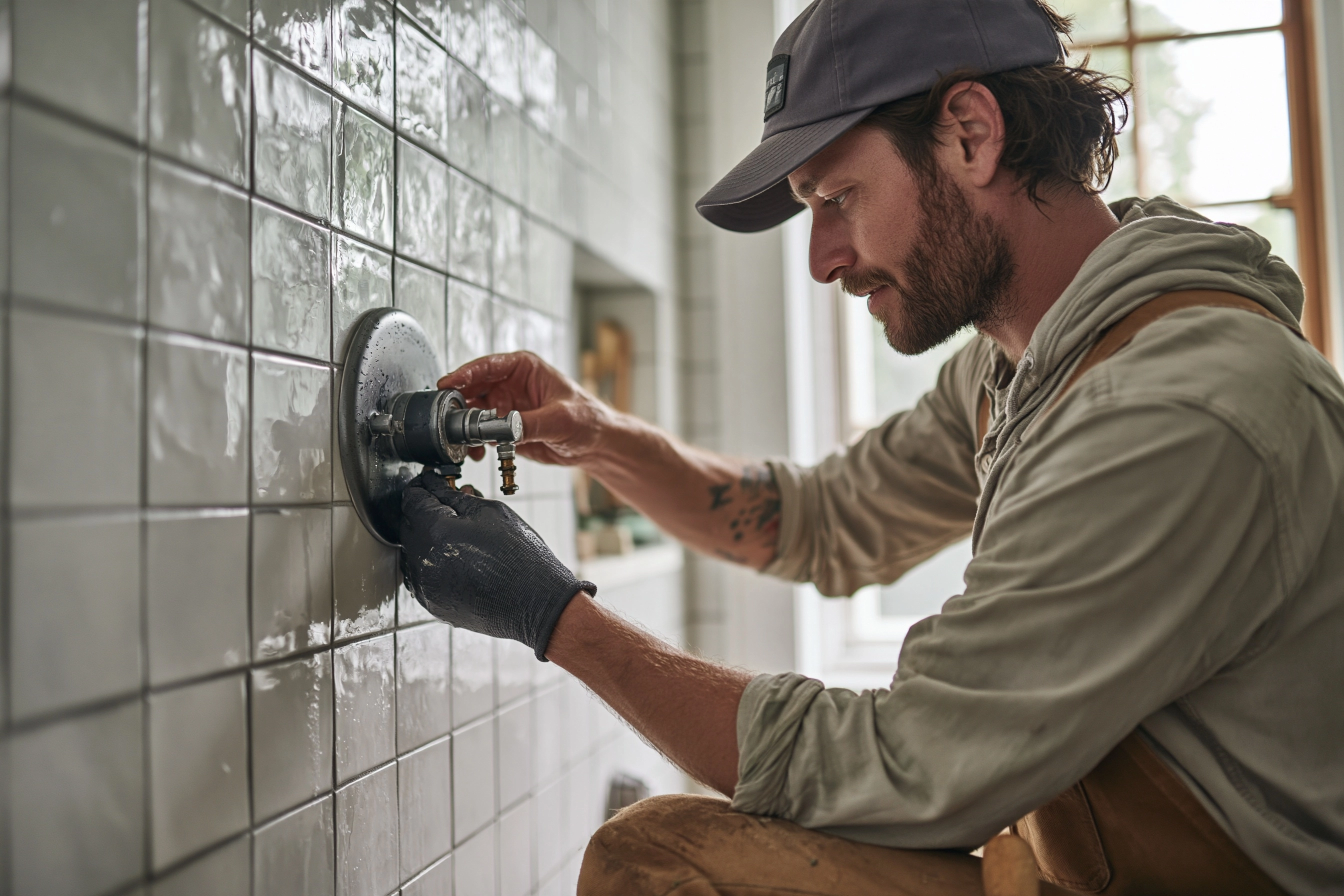
Fixture repair covers the visible parts of the plumbing, from the handle you turn to the valve inside the wall.
Whichever part has failed, the flapper, the fill valve or the wax seal, is what gets replaced on a toilet that keeps running, rocks or seeps at its base. Only a cracked bowl needs the toilet itself replaced.
Cartridges, washers and valve seats wear down inside a faucet, and a drip at the spout is the sign. Replacing the worn part ends it, though a corroded faucet is better swapped for a new one.
If a shower will not hold one temperature, the cartridge behind the handle is the first suspect. Replacing it fixes the swing, and a damaged valve body is replaced as a whole.
A disposal that hums but does not turn can have a jammed blade or a dead motor, and a leaking one may have a cracked housing. Working out which it is decides between repair and replacement.
An outdoor faucet that freezes can split behind the wall and only show itself when the water is turned back on. The plumber replaces the faucet or the damaged length of pipe behind it.
Putting a sink in a new spot, or adding a fixture, calls for fresh supply and drain lines. Before any work is agreed, the plumber checks how far those lines can reach.
Where a fixture repair leaves a slow drain, drain cleaning picks up. Dampness inside a cabinet gets a look through leak detection, and the plumber homepage lists all the other work.
Call us to discuss your current issue and how we can assist you. The call is free and you get a free, personalized estimate with no obligation. We're here to help.
Call (855) 321-3426